
x
Reaching your sixties often brings sharper awareness of oral comfort, appearance and long‑term health, just as navigating treatment options becomes unexpectedly confusing. Understanding how age, existing conditions and daily lifestyle shape realistic choices is key to avoiding unnecessary expense. As people plan for an active retirement, secure teeth become less a luxury and more a foundation for enjoying meals out, travelling and smiling without hesitation.
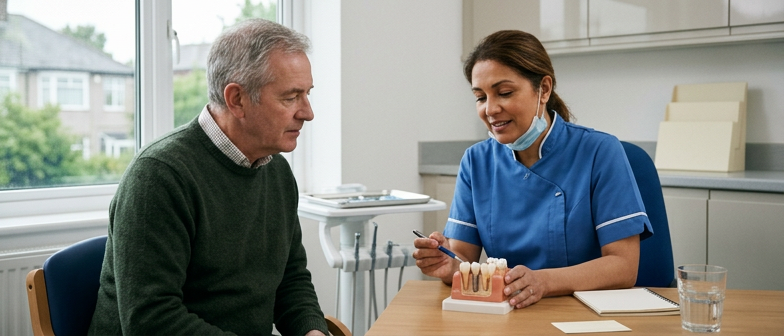
Thinking about implants later in life can feel confusing, especially when you hear that NHS rules are very strict. There isn’t a simple public checklist you can tick off, so it helps to understand the general idea of how clinicians tend to decide who might be offered NHS implants.
For people over 60, NHS teams usually look first at basic function: can you chew, speak clearly, and manage with more traditional options like dentures or bridges. If a well‑made denture can do the job, implants are rarely offered. On the other hand, if you struggle to keep a denture in place, or you have a lot of missing teeth that seriously affect eating or social life, a dentist may feel an implant‑based solution is clinically justified. They also look at mouth health in general: gum disease, smoking, and medical conditions can all make implants more risky or less likely to succeed.
| Typical consideration for over‑60s | How it may influence NHS implant decisions (general clinical tendencies, not guarantees) |
|---|---|
| Ability to chew everyday foods | Greater difficulty coping with normal meals may push the team to explore more stable options |
| Speech and social confidence | Serious impact on clear speech or confidence in public can make tooth replacement feel more essential |
| Success with dentures or bridges | If you manage fairly well with conventional options, implants are usually seen as less justifiable |
| Overall mouth and gum health | Healthier gums and good cleaning habits make implant planning more realistic in principle |
| Medical history and medications | Complex conditions or certain medicines can lead clinicians to be more cautious about implant surgery |
Although there is no public, detailed table of rules, there are patterns in who tends to be considered. People who have lost many teeth due to accidents, genetic conditions, or severe mouth problems sometimes fall into a higher‑priority group. Another common scenario is when a conventional denture keeps failing, rubbing, or dropping despite several adjustments. In that kind of case, a hospital‑based specialist may be more willing to explore implants. Even then, funding is limited, so being over 60 does not automatically help or harm your chances; the key question is whether implants are the only realistic way to restore basic daily function.
Thinking about implants later in life often starts with a simple question: do I stay NHS, or go private. For over‑60s, the answer usually involves a mix of cost, waiting time, and how much choice you want over materials, timing and overall comfort.
For dental implants, the key thing is that routine NHS bands focus on keeping existing teeth going, not replacing them with implants. In England, Band 1 covers check‑ups and preventive care at £27.90, Band 2 handles fillings and extractions at £76.60, while Band 3, at £332.10, includes dentures and bridges rather than implants. Wales has set prices for check‑ups, restorative work and a cap of £384 per course, and in Scotland routine check‑ups are free, with most patients paying up to 80% of charges capped at £384 elsewhere. Some people in England can get free NHS care, but even then implants are usually not offered and you may be steered towards dentures or bridges as the standard tooth‑replacement route.
Private treatment steps in where NHS options stop, especially for implants. You are more likely to be offered 3D scans, longer assessment appointments, and detailed chats about appearance and comfort. Waiting times are usually shorter, especially if local NHS practices are not taking on more patients. The trade‑off is cost: implants privately are far above NHS bands, and you pay per implant and restoration. Many over‑60s end up using the NHS for regular check‑ups and hygiene, then going private for specific implant work, spreading appointments and payments over time. Thinking about how long you want your solution to last, and how important stability and chewing comfort are, can help you decide which route feels right.
| Aspect that often matters to over‑60s | NHS‑focused approach (general pattern) | Private‑focused approach (general pattern) |
|---|---|---|
| Main treatment goal | Preserve and restore function with the simplest suitable option | Tailor treatment closely to comfort, appearance and personal preferences |
| Choice over implant materials | Usually limited, if implants are offered at all | Wider discussion of implant systems, crowns and aesthetic details |
| Appointment length and flexibility | Appointments may feel time‑pressed and less flexible around personal schedule | Greater scope for longer visits and timing that fits around work, travel or caring |
| Waiting time for advanced treatment | Can involve multiple referrals and longer waits | Often shorter pathway from consultation to treatment |
| Mixing routes | Common to have check‑ups and basic work on the NHS | Common to have complex or cosmetic work, including implants, privately |
Losing teeth after 60 can be upsetting, and being told the NHS will not fund implants often feels like a double blow. It helps to know what the NHS does cover, what it usually refuses, and how you can still find something that looks and feels acceptable without wrecking your budget.
NHS dental charges are split into bands: Band 1 is about £27.90, Band 2 about £76.60, and Band 3 about £332.10, which covers more complex treatments such as dentures or bridges. Implants, though, are generally not classed as a standard NHS treatment, so even in later life you are usually steered towards Band 3 options rather than implants. Some people do get free NHS dental care, but that is normally linked to things like certain benefits or being under a set age, not simply being over 60, so most older adults still pay normal NHS charges for non‑implant work.
If you are set on implants, you are usually looking at private treatment. Many high‑street practices now offer monthly instalment plans, which can turn a large one‑off bill into a manageable direct debit. Dental insurance and payment plans often help more with routine check‑ups and emergencies than with full implant costs, but some policies give a small contribution. Another option is a mixed approach: get any extractions or dentures done on the NHS, then pay privately for one or two key implants to stabilise a denture, balancing comfort and cost later in life.
Thinking about dental implants later in life can feel exciting and a bit nerve‑racking. A clear plan from the first chat with your dentist to the days after surgery makes everything feel more manageable and in your control.
Before your consultation, it helps to jot down any medicines you take, medical conditions, and what you most want from your new teeth, such as eating comfortably or feeling confident smiling. Bring your glasses, a list of questions, and any old dental records you may have. During the appointment, expect your dentist to assess your gums, bone, and bite, and to talk honestly about risks, healing time, and alternatives. Ask about how many visits you’ll need, how long gaps between stages might be, and what to do if something feels uncomfortable at home. The aim is to leave with a realistic plan and no awkward doubts.
In the week before surgery, arrange lifts to and from the clinic, stock up on softer foods, and set up a comfy “recovery corner” with pillows, pain relief as advised, and something easy to watch or read. On implant day, wear loose, warm clothing and avoid heavy meals or alcohol beforehand. Afterwards, follow the cleaning instructions exactly, even if you feel fine; gentle salt‑water rinses and not poking the area make a big difference. Plan lighter activities, keep your head slightly raised when resting, and call the practice if swelling, pain, or bleeding feels worse rather than better. A little organisation goes a long way to a calm recovery.
Q1: Who over 60 is most likely to be offered NHS dental implants, given the strict clinical rules?
A1: NHS implants after 60 are usually reserved for people who cannot cope with dentures or bridges, or who’ve lost many teeth through accidents, genetics or severe mouth problems.
Q2: Why do NHS dentists usually suggest dentures or bridges instead of implants for older patients?
A2: NHS rules focus on restoring basic function as cheaply and safely as possible. Well‑fitting dentures or bridges normally meet this aim, so implants are seen as exceptional, not routine.
Q3: How does the NHS implant pathway for over‑60s differ from going private in terms of assessments and waiting times?
A3: NHS care prioritises basic treatment, with limited implant access and often long waits. Private clinics offer longer assessments, advanced scans and usually much shorter waiting times.
Q4: If the NHS refuses implants, what practical ways can over‑60s spread private treatment costs?
A4: Many practices offer monthly payment plans. Some dental insurance gives small contributions. A mixed approach combines NHS dentures with a few private implants to stabilise them.
Q5: What should someone over 60 do before and after implant day to support smoother recovery at home?
A5: Before surgery, organise transport, soft foods and a comfy rest area. Afterward, follow cleaning advice, use salt‑water rinses, rest with head raised and contact the practice if symptoms worsen.