
x
Laptops glow where crayons once ruled the table, and shy whispers become proud sentences shared across continents. With playful stories, quick games, and patient voices, adults at home can turn scattered after‑school minutes into meaningful steps in confidence, curiosity, and real-world communication.
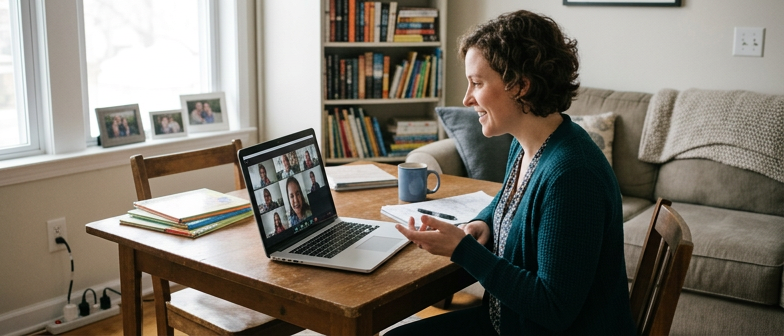
Many kids tap a screen expecting cartoons, not homework. The first job is not grammar; it is comfort. When the adult on the other side feels like a kind guest instead of a strict instructor, kids relax, look up, and are far more willing to try new words out loud. A few easy minutes at the start can change the whole mood. Ask about a stuffed animal on the couch, a poster behind them, or the snack on the table, and gently attach simple phrases: “a blue dinosaur,” “your favorite pillow,” “sunny today.” Children get to show off their own world while hearing language that clearly belongs to them. The device stops feeling like a cold box and turns into a little window between two real rooms.
Security also comes from knowing what happens next. Short, playful “class habits” in simple phrases and big gestures work well: a hand sign for “your turn,” a silly face for “I don’t understand,” a raised hand for “pause, please.” When kids know the rules, they worry less about “doing it wrong” and focus more on speaking. Routines can also tame home distractions instead of fighting them. A barking dog becomes a chance to talk about “loud” and “quiet,” a sibling walking by becomes “brother,” “sister,” or “baby.” Life around the child turns into material instead of a problem. Add tiny “breathing breaks” between activities—two deep breaths, a quick stretch, a shake of the hands—so attention can reset. At home, pressure needs to stay low if focus is going to stay steady.
Children learn best when they feel like they are playing, not being tested. Instead of saving games for the last five minutes, build the whole session around simple playful tasks. A “mission” format works especially well: today’s goal might be to recognize a handful of new words, say two short sentences, and sing one chorus. Every time a mission is finished, a star, sticker, or quick drawing appears on the screen, and the adult reacts with big facial expressions and lively praise. Kids see progress growing in front of them and push themselves to “earn one more star” without anyone lecturing them.
Favorite characters, sports, and hobbies are powerful fuel. If a child loves a certain hero, the adult can “become” that hero and ask questions in simple phrases, while the child answers as themselves. A kid who loves drawing can sketch a scene during the lesson and hold it up to the camera, describing it with short phrases learned that day. When the child’s own passions lead the activity, motivation comes naturally. Short, focused rounds are key: a few minutes of “show and say,” a quick “find and show” challenge, then a tiny rhythm chant. Ending each mini‑game with a clear countdown and a repeatable goodbye phrase helps kids feel closure instead of sudden loss when the fun stops.
| Online session style | Main strengths for kids | Possible challenges | Best fit for which learners |
|---|---|---|---|
| Fast mini‑games and chants | High energy, low fear | Can feel chaotic | Very active, easily bored |
| Story‑based, slow paced sessions | Deep focus, rich images | Needs patience | Quiet, imaginative |
| Craft or drawing centered time | Hands‑on, memorable | Requires setup | Artistic, tactile |
| Role‑play adventures | Lots of speaking turns | Shy kids hesitate | Outgoing, dramatic |
Choosing a style that matches the child’s nature usually matters more than choosing the “perfect” curriculum.
Many young learners stay silent because they fear being wrong. Turning mistakes into playful moments changes everything. When a child mispronounces a word, the adult can exaggerate the mistake on purpose, act confused, and then gently model the clearer version, as if both sides are solving a puzzle together. The message becomes “we laugh with the mistake,” not “we laugh at you.” Over time, kids learn that errors are simply steps in the game, not proof that they “can’t learn.”
Words do not need to appear first. Movements and expressions can lead. A new word can arrive with a big gesture; kids copy the action first and then add the sound. Yes–no questions can be answered with nods and shakes, then short sounds, then short phrases. Many quiet children are expressive with their hands and faces long before they are ready to speak; honoring that gives them a safe bridge from movement to voice. In small groups, simple chains work well: one child says a color, another dashes off to find something in that shade at home, then shows it and passes the turn along. The screen starts to feel like a lively playground, not a silent test room.
Vague praise fades quickly. Precise feedback sinks in. Instead of repeating “Good job” all class long, the adult might say, “You waited and found the word by yourself,” or “Your voice was stronger that time.” These comments tell children exactly which effort mattered. Step by step, they build an inner picture of themselves as someone who can handle challenge, try again, and improve.
At first, home‑based sessions often center on labels for people, colors, toys, and food. Once those feel easy, topics can slowly shift toward feelings, likes, and dreams: “I am tired,” “I like scary stories,” “I want to visit the ocean.” Kids start to see that this new language is not just for pointing at things; it can show the inside of their mind. Pictures and short clips help stretch thinking beyond the living room—showing parks, kitchens, beaches, or playgrounds—and kids practice building simple stories about what might be happening there.
As confidence rises, children can take on small “projects” that ask for more planning. A tiny presentation about a favorite book, a “tour” of their bedroom, or a pretend weather report can all be built from short phrases they already know. The screen becomes a stage they control. Preparing even three or four sentences nudges kids to think about order, clarity, and audience, all without turning into a heavy speech assignment. Warm reactions from the adult—and, when present, from family members watching nearby—turn these moments into powerful memories of success.
| Lesson focus | Great for children who… | Helpful for adults who… |
|---|---|---|
| Song and movement | Need to move, love rhythm | Enjoy performing and big gestures |
| Storytelling and books | Love quiet time, strong imagination | Like voices, props, and reading aloud |
| Real‑life tasks at home | Enjoy helping, curious about everyday objects | Prefer flexible, low‑tech activities |
| Project‑style sessions | Can focus longer, like building or explaining | Like planning and guiding step‑by‑step work |
Matching personalities on both sides of the screen keeps lessons sustainable for families and for adults who guide them.
The biggest gift of home‑based sessions is not perfect accent; it is a feeling of “I can try.” With a kind adult, predictable routines, playful missions, and activities tied to favorite toys and interests, kids discover that they can speak up, be understood, and keep going even when a word comes out wobbly.
Simple end‑of‑lesson rituals help lock in that feeling. A quick “Today you were brave when you…” reflection, asking the child to name one thing they did well, and a hint about a fun task next time all send the same message: you moved forward today, and more adventures are coming. Over weeks and months, those tiny moments stack up. The child who once hid behind the couch now leans toward the camera, eyes bright, eager to share one more sentence. The living room screen has quietly turned into a bridge between their everyday world and a much wider one they are ready to explore.
How can I keep young children engaged when teaching English online?
Use short, game‑like activities, visual props, songs, and frequent interaction. Rotate tasks every 3–5 minutes, include movement (TPR), and personalize content with their interests to keep attention high.
What should a strong English lesson plan for children include?
Include a clear objective, simple target language, warm‑up, guided practice, communicative games, and a quick review. Build in repetition, visuals, and chances to speak so kids can use new words in context.
What qualifications help me get online English teaching jobs for children?
A bachelor’s degree, a TEFL/TESOL certificate, and any classroom or tutoring experience with kids are valuable. Platforms also favor teachers who understand online tools and child‑centered teaching methods.
How can parents support English learning for children between lessons?
Parents can read simple English storybooks, play age‑appropriate English videos, use labeled objects at home, and encourage kids to describe daily routines in English, keeping the experience fun, not pressured.
What’s important to know when teaching English as a second language to children?
Children acquire language best through meaningful interaction, not grammar drills. Focus on listening and speaking first, use plenty of context and visuals, and respect their first language as a support, not a barrier.